Revolutionary Stories in Biotech - Sir Alec John Jeffreys

We are launching a new format in the BioRevolution newsletter: “Revolutionary Stories in Biotech”
There’s a reason why biotechnology has captivated me. As a normal being on this earth, you can sometimes be the savior of one life, and at other times, thousands. You’re not limited to just one way of doing this. When we think of saving lives, the easiest thing that comes to mind is to associate it with medical genetics. However, when you take a step back and look at the bigger picture, you’ll see that by focusing on issues like famine, biodiversity, and life on land and in water, you can save not just human lives, but the lives of many other species. Imagine, a single body, a single mind, a single life leading the way to save thousands—how awe-inspiring is that! Only souls who are truly dedicated, determined, and hardworking can achieve this in such a revolutionary way.
One such soul, by discovering DNA fingerprinting, first left an unforgettable impact on the life of a migrant child, then helped bring the murderer of two girls to justice, and eventually touched the lives of thousands of us. That person is Sir Alec John Jeffreys.
This captivating story holds a special place in my heart, and I can confidently say that it continues to touch lives through its narrative. Today, on September 10th, we celebrate the day in 1984 when Sir Alec Jeffreys discovered DNA fingerprinting.
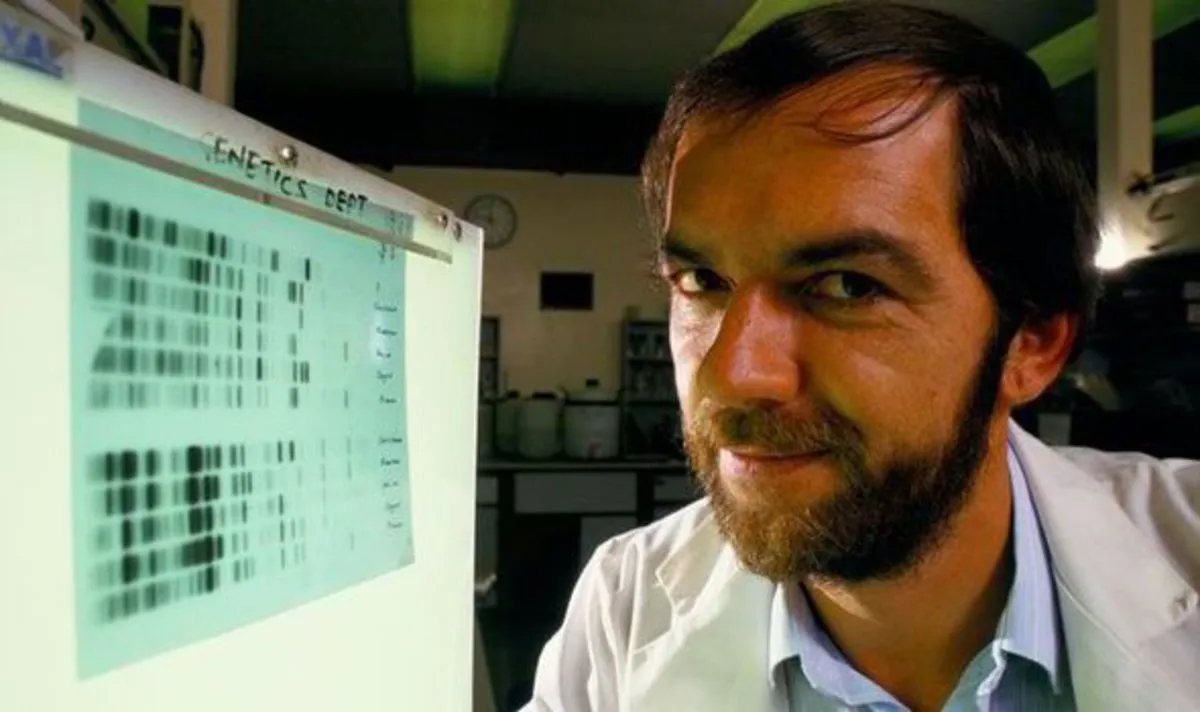
Professor Sir Alec Jeffreys studied biochemistry and genetics at Merton College, Oxford. Following a postdoctoral fellowship at University of Amsterdam , where he co-discovered split genes, he moved to the University of Leicester in 1977. On September 10, 1984, he had a “eureka moment” in the lab, leading to his groundbreaking discovery of DNA fingerprinting. After more than 35 years there, he retired in 2012.
Sir Alec Jeffreys has been recognized with numerous prestigious awards, including a Knighthood, the Lasker Award, and the Louis-Jeantet Prize for Medicine. His contributions have directly impacted millions of lives. He enjoys reading novels and surfing in Cornwall. He is married with two daughters and two grandsons.
What DNA Fingerprinting is?
DNA fingerprinting, also known as DNA profiling or genetic fingerprinting, is a forensic technique used to identify individuals based on their unique genetic makeup. Although it is frequently stated that any two people’s genomes are approximately 99.9% identical to one another, the remaining 0.1% is what makes each individual genetically unique. This small percentage difference in our DNA sequences contains variations called polymorphisms, which are distributed throughout the human genome.
DNA fingerprinting takes advantage of these polymorphisms, particularly focusing on regions of the DNA known as short tandem repeats (STRs). STRs are short sequences of DNA that are repeated in specific locations in the genome. The number of repeats in these regions varies significantly between individuals, making them highly useful for identification purposes.
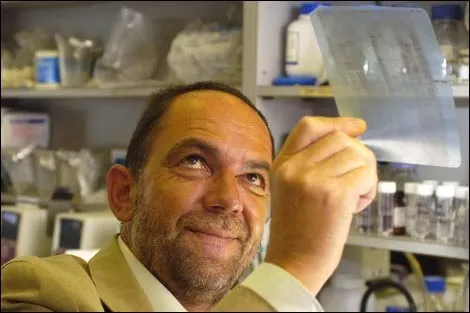
The process of DNA fingerprinting involves extracting DNA from a biological sample—such as blood, saliva, or hair—amplifying the STR regions using a technique called polymerase chain reaction (PCR), and then separating and analyzing the amplified fragments using gel electrophoresis. The resulting pattern of DNA fragments, which appears as a series of bands on a gel, is unique to each individual, much like a fingerprint.
🪄Series Suggestion
Code of a Killer is a mini-series that tells the true story of Alec Jeffreys’ discovery of DNA fingerprinting.
DNA fingerprinting has a wide range of applications, extending from forensic science to medical research.
Criminal Investigations: Used to match suspects with evidence found at crime scenes.
Paternity Testing: Determines biological parenthood.
Identification of Missing Persons: Helps identify missing persons or unidentified human remains.
Immigration Cases: Proves biological relationships between family members.
Disaster Victim Identification: Identifies victims of large-scale disasters.
Genetic Research: Aids in understanding the hereditary transmission of genetic disorders.
Identification of Mass Graves: Used in identifying mass graves from periods of genocide or war.
Agricultural Research: Tests the genetic purity of plant varieties.
Conservation Biology: Assesses the genetic diversity of endangered species.
Personal Genomics: Used to predict individuals’ health risks in personal genomics projects.
This versatile technique is a groundbreaking tool in both theoretical and applied genetics. The uniqueness of an individual’s DNA fingerprint ensures a high level of accuracy in these applications.
🪄 Video Suggestion
Professor Sir Alec Jeffreys marks 35 years since discovery of DNA fingerprinting
I am deeply honored to introduce Sir Alec Jeffreys to you all. I extend my heartfelt thanks to him for his remarkable work and the countless lives he has touched.
In 2020, I had the opportunity to reach out to him and share how his life story had inspired me. For this edition, I tried to contact him again to ask some questions to share with you, but unfortunately, I was unable to reach him this time.
If you have any suggestions for who to cover in the next edition, please feel free to share them in the comments.
With the hope and wish of one day becoming one of these revolutionary stories,
📰 SUBSCRIBE TO MY LINKEDIN NEWSLETTER
If you liked this newsletter article, I hope you’ll consider being a regular subscriber. 🙏
Just scroll up to the very top and click that SUBSCRIBE button.
Originally published on LinkedIn.