BioRevolution #11 - 3D Bioprinters
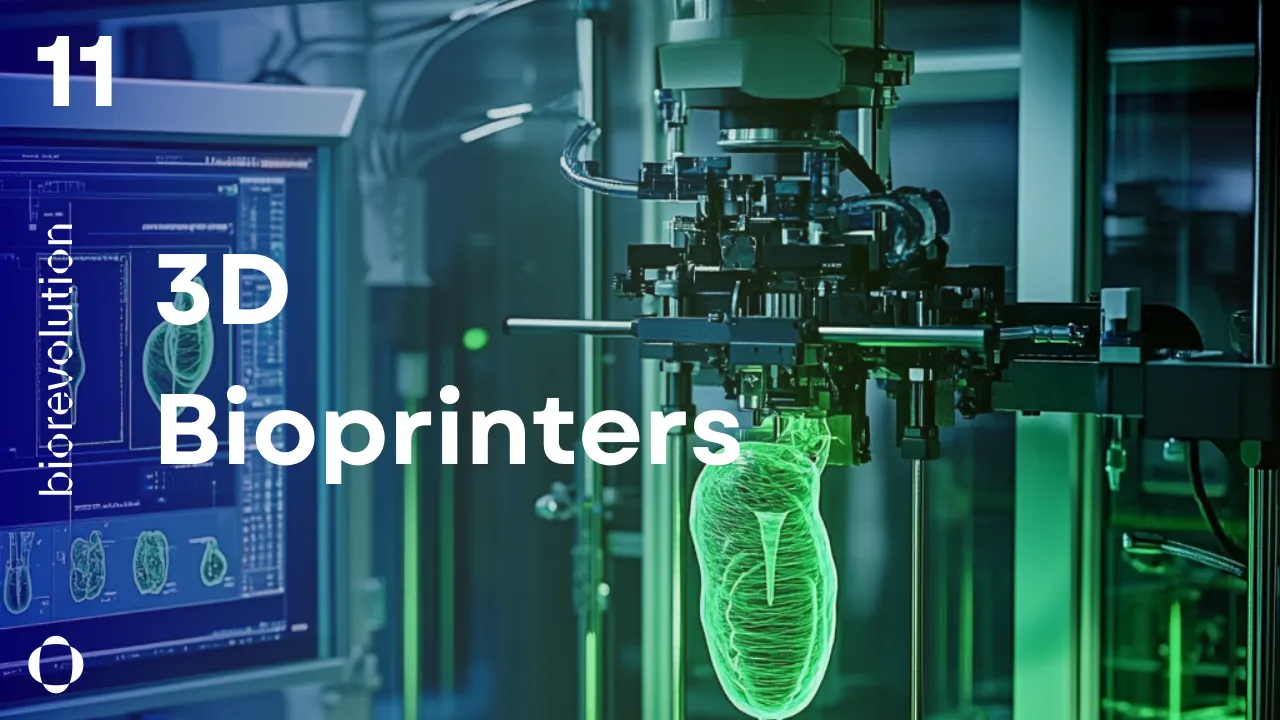
WOW! What a topic! I’m here with a subject that I’ll never forget and can’t wait to encounter again and again throughout my life; 3D Bioprinters.
When I first came across the topic of 3D Bioprinters, I was deeply impressed. One significant reason for this is that it resonates with the essence of interdisciplinarity. Biomaterials, device technology, stem cells, and organoid science seamlessly converge to form this fascinating field.
The areas it influences are countless, but what impressed me the most is its role in drug discovery. Disease modeling is conducted through 3D bio-printed tissues and organs, and drug trials are carried out on these models. The complexity of animal testing is glaringly obvious, as is the lengthy process of drug development. With 3D bioprinters, drug discovery could gain incredible momentum, which would mean reshuffling the entire industry’s deck.
As a result of this excitement and influence, I chose the topic of my BSc thesis as “The Role of 3D Bioprinters in Drug Discovery.” The impact it had on me never diminished during the months I worked on it; on the contrary, it increased.
Now, I am on the stage with BioRevolution #11 - 3D Bioprinters. Be sure to read this issue to stay updated on developments!
Along with this issue, there are past issues that you should definitely read. These are; Organoids and Organoid Intelligence.
Scientific Perspective
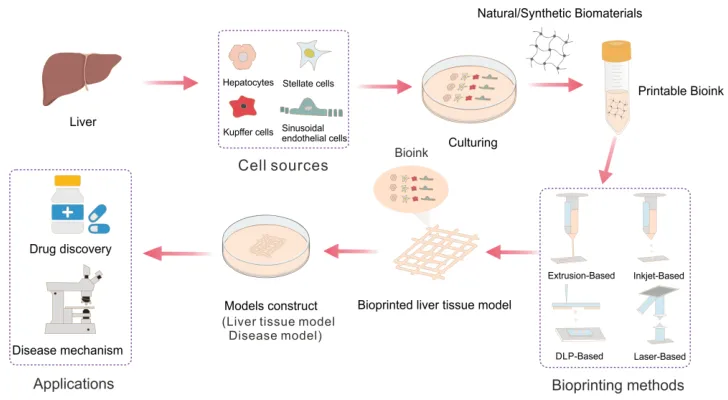
A 3D bioprinter is a technology that creates complex biological structures by layering living cells and biomaterials. This device allows for the controlled placement of cells, biomolecules, and various biomaterials to produce three-dimensional models of tissues and organs. Each layer is carefully positioned and sequentially added, allowing for the step-by-step creation of cellular structures or tissues. The devices can use various printing techniques, such as stereolithography (SLA), inkjet, or extrusion, to print at different resolutions and levels of precision.
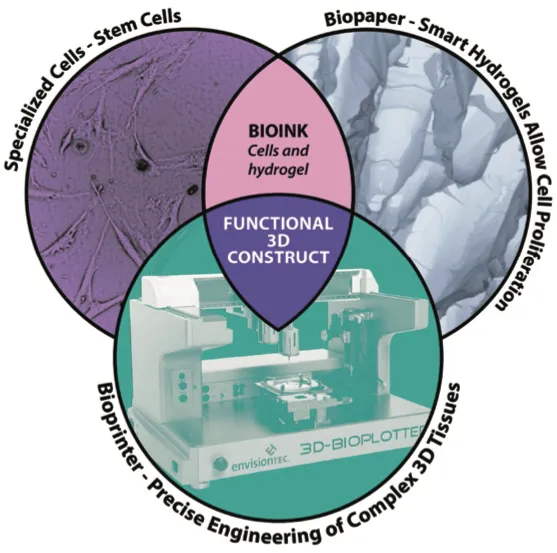
Biomaterials are substances that can be used in conjunction with living cells and form the building blocks of tissues. These biomaterials constitute the fundamental components of “bioinks” used in the bioprinting process. Biomaterials provide the necessary structural support for cells to survive and function, and they typically consist of biocompatible materials like natural or synthetic polymers, hydrogels, or collagen. Additionally, the biocompatibility and biodegradability of biomaterials allow them to perform their functions without causing toxic reactions in the body. 3D bioprinters layer these biomaterials to create cellular structures and functional tissue models.
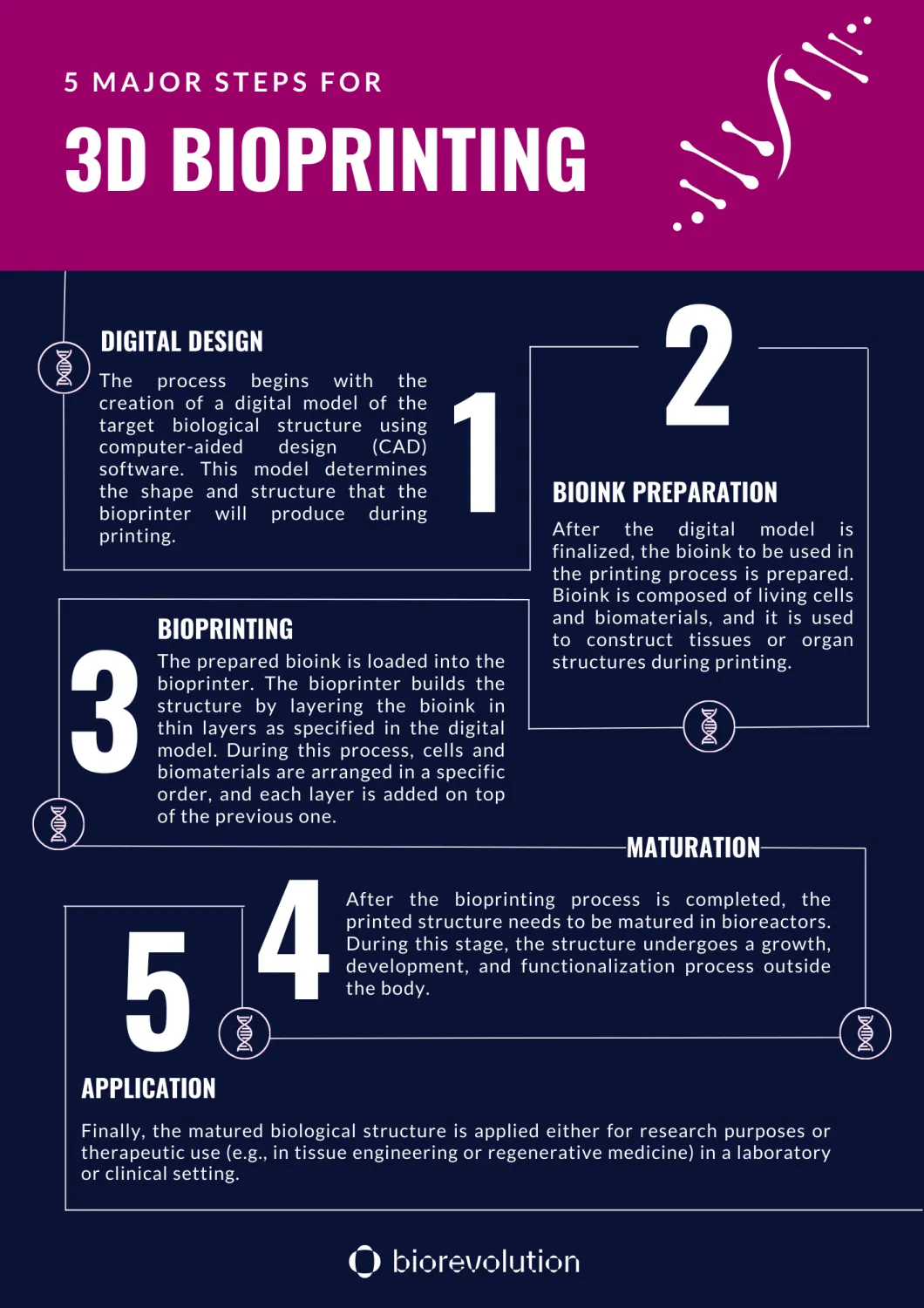
Layer-by-layer assembly is a process in 3D bioprinting where biomaterials and cells are placed in thin layers on top of each other. In this method, each layer is carefully positioned based on a pre-determined design or model. After each layer is placed, they come together to form a final three-dimensional, complex biological structure. This method helps to mimic the microstructure of natural tissues and accurately simulate biological functions, playing a critical role in tissue engineering and regenerative medicine.
The 3D bioprinting technology has a wide range of applications in the fields of medicine and bioengineering. This technology enables the laboratory production of functional tissues and organs for tissue engineering and organ transplantation, and it can be applied in various areas such as drug testing, cancer research, modeling neurological diseases, and testing cosmetic products. The development of human tissue-like models as alternatives to animal testing offers significant innovations in personalized medicine and controlled drug release. Additionally, it provides opportunities for educational and research purposes and for creating bioprinted cellular patches for the repair of injured tissues in regenerative medicine. These broad application areas demonstrate how 3D bioprinting has the potential to revolutionize healthcare and the scientific world.
🪄Video Suggestion
3D-Printing Heart Tissue With Human Stem Cells by CNET
Market Perspective
The global 3D bioprinting market reached USD 1.38 billion in 2024 and is expected to reach USD 4.74 billion by 2033, growing at a CAGR of 13.9%. The main drivers are the growing ageing population and increasing R&D activity. Beyond regenerative medicine, bioprinting is growing fast in drug development, where printed human tissue models are used for drug screening and toxicity testing instead of costly and often inaccurate animal models.
-IMARC Group, 3D Bioprinting Market Report 2025-2033-
Startup Ecosystem
3D bioprinting is one of the most global fields in biotech. Beyond North America and Europe, Japan, South Korea and Australia have strong companies that already sell products worldwide, and China is investing heavily through national research programs. Here are some examples:
A Vancouver based company, founded in 2013, develops bioprinted tissue therapeutics as a new category of regenerative medicine. Its platform integrates AI-powered bioprinting, computational design, therapeutic cells and advanced biomaterials to create living tissue implants that can replace, repair or supplement biological functions in the body. Its main targets are serious metabolic and endocrine diseases, such as type 1 diabetes, and liver diseases. In January 2025, it closed a $115 million Series B led by Dimension, with Novo Nordisk among the investors. This builds on a CA$200 million partnership with the governments of Canada and British Columbia and a partnership with Novo Nordisk focused on diabetes and obesity.
A Tokyo based company, founded in 2010, developed a unique bioprinting technique inspired by Japanese flower arranging. Its “Kenzan method” stacks small balls of living cells, called spheroids, onto an array of fine needles, in the same way flowers are held in a kenzan pin holder. As the cells mature, the spheroids fuse into solid tissue without needing any artificial scaffold. It is one of only around 10 bioprinting companies worldwide that already have products on sale. Its technology is used to create transplantable tissues such as blood vessels and nerves, and it has started joint research with Stanford and Johns Hopkins as it prepares to fully enter the US and European markets.
A Seoul based company, founded in 2012 and now listed on the Korean stock market, builds a patient-specific skin regeneration platform. It turns the patient’s own tissue into bioink, uses AI to model the wound, and bioprints a customized patch directly for the patient. Its first commercial application is diabetic foot ulcers, and it is expanding into cartilage, kidney and skin cancer treatments. In the second quarter of 2025, its sales grew 66% year on year and it turned an operating profit. It plans to enter the US, European and Japanese markets from the second half of 2027.
A North Carolina based startup, founded in 2020 with roots and operations in Finland, develops 3D bioprinted bio-synthetic implants for soft tissue repair, with potential applications from rotator cuff tears to ligament reconstruction. Its implants are designed to support the body’s own healing and are printed on the company’s own modular bioprinting platform. The technology is still at an early stage, with animal testing currently underway, and the company works with Wake Forest University’s Institute for Regenerative Medicine to advance it. It was named one of TIME’s Best Inventions of 2025, and in 2024, the European Space Agency selected its bioprinter for experiments aboard the International Space Station to study how tissue forms in microgravity. It has secured USD 2 million in pre-seed funding and USD 4 million in grants.
If you are interested in 3D bioprinting and would like to learn more about the startups mentioned here, or simply exchange ideas about this field, feel free to reach out to me. I’d be happy to share more details and help you find the right connections.
The information in this Market section was last updated in September 2026. Market figures, funding amounts and company details may have changed after this date.
I asked Tomi, Co-Founder of BRINTER, for his perspective on the future of 3D Bioprinters
“Bioprinting technologies have great potential to support medical treatment also in space and increase the crew’s autonomy on long-term missions. Astronauts could create tissue-like constructs to replace damaged parts of their bodies, for example, to treat skin burns or bone damages, or print personalized drugs that ideally matched to the person.
Space offers a new environment to bioprint 3D structures that can mature into tissues and/or larger organs. Combing cell or tissue-specific biomaterials with different cell types and highresolution 3D bioprinting will enable scientists to develop and hopefully improve tissue and organ modelling techniques and understanding of the biophysical mechanisms of tissue generation, regeneration, and longevity.
During human long-term deep space exploration missions, more needs to be done with less to make things work in the challenging space environment, so various technology elements get optimized and miniaturized.
The microgravity environment offers advantages to 3D bioprinting thanks to the fact that in microgravity, cells exhibit spatially unrestricted growth and assemble into complex 3D aggregates, in contrast to typical cell growth in monolayer (2D) cultures as occurs on Earth. In addition, thanks to microgravity, there is no need for supporting structures during 3D printing, but it is possible to 3D print structures that, differently from Earth, do not have to sustain their weight as they grow.“
Tomi Kalpio - improving the quality of life
**Thank you so much Tomi, I am so happy that you have collaborated with me on this issue.
Future Perspective
Along with this issue, there are past issues that you should definitely read. These are; Organoids and Organoid Intelligence. If you haven’t read them, please read these two issues that I recommend and then let’s take a step towards the future perspective.
“As observed from various studies, three-dimensional bioprinting technology is still in its developmental stage. For it to be integrated into daily life, it not only needs to become more reliable but also more affordable. Like almost every emerging technology, it is currently quite expensive to be incorporated into everyday use. However, as the technology advances, gains trust, and new market players emerge, this technology is expected to become more affordable. This reduction in cost will enable more research, which will, in turn, accelerate technological advancement. As technology advances, its reliability will also increase. Hence, there exists a triangle of cost, reliability, and technological development, each supporting the other.
In the coming years, the transition from a one-size-fits-all treatment approach to personalized medicine is expected to become more visible. This shift will not only transform the patient-doctor relationship but also the patient-pharmacist and patient-scientist relationships. As mass-produced drugs are replaced by personalized medications, the initial high demand for qualified personnel in this field may pose a challenge. However, this can be addressed by updating education systems to keep pace with these new technologies. It is crucial to build educational systems that can quickly adapt to these technological changes.
As 3D bioprinting technologies advance, integration with silicon-based technological developments can also be anticipated. This implies a broad spectrum of new developments, ranging from Organoid Intelligence to digital twin technologies in healthcare. In a scenario where an individual’s 3D bioprinted brain organoid can communicate with a silicon-based computer, we may need to reconstruct our current life scenarios from scratch. Although advancements in artificial intelligence remain silicon-based, if brain organoids can interact with silicon-based devices, these advancements can also be seen as biologically based. Lives lost while waiting for organ transplants could become a thing of the past with the advent of 3D bioprinting. The expectation is that receiving a 3D bioprinted organ, personalized to the individual, will no longer be a distant future.”
-I quoted this part from “CONCLUSION: FUTURE POTENTIAL OF THE ROLE OF 3D BIOPRINTERS IN DRUG DISCOVERY” topic of my BSc thesis.-
📰 SUBSCRIBE TO MY LINKEDIN NEWSLETTER
If you liked this newsletter article, I hope you’ll consider being a regular subscriber. 🙏
Just scroll up to the very top and click that SUBSCRIBE button.
Originally published on LinkedIn.