BioRevolution #7 - Digital Twins in the Lab
As we look at the digitization processes from today’s perspective, we can observe the transition from traditional physical storage methods to silicon-based cloud systems. Additionally, we’ve moved from physically published scientific journals to those that are now available online. I discussed the journey from silicon-based cloud systems to bio-based data storage in the “DNA Data Storage” issue.
It’s misleading to assume that technological advancements have reached their pinnacle and that no further progress can be made. When considering digitization in laboratories, there is still a long way to go. Claiming that we have reached the final stage of laboratory digitization based on current life and technological conditions would be a significant mistake. If you are a subscriber to my newsletter and have become passionate about being surprised with each new issue, I doubt you will fall into this mistake.
In our last issue, we addressed digital twins from the perspective of healthcare; in this issue, we will explore their use in laboratories. I believe that the greatest benefit of digitization in laboratories is effective time management. I often hear from my colleagues in the scientific community, “I need to go to the laboratory to check on my samples.” But what if you could control it remotely? What if you could simulate an experiment before conducting it?
Let’s get started!
Scientific Perspective
Digital twins are revolutionizing laboratory environments by creating virtual simulations of physical experiments. This technology enhances experimental accuracy, optimizes processes, and accelerates scientific discovery, allowing researchers to simulate and predict outcomes with unprecedented precision.
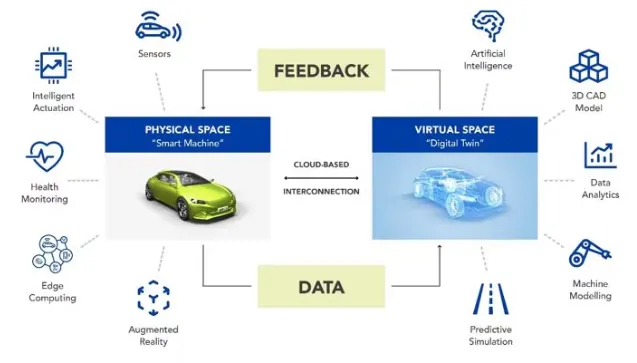
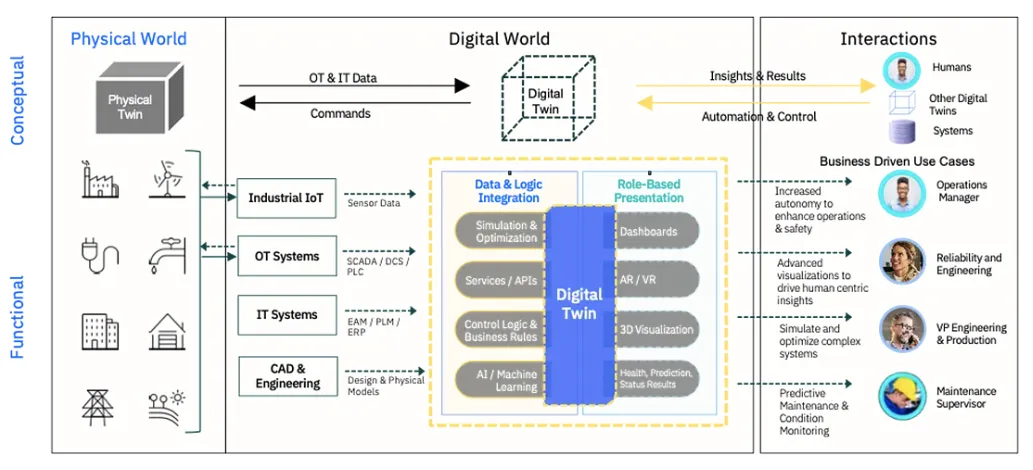
Digital twins in laboratory settings serve as exact virtual replicas of biological systems, chemical reactions, or physical processes. By integrating real-time data from sensors, historical experimental data, and predictive analytics, these models provide a virtual testing ground that mimics and forecasts the behavior of complex systems under various conditions.
The creation of digital twins for laboratory use begins with the collection of comprehensive data sets, including all variables from the experimental setup. This involves data from laboratory instruments, environmental monitoring, and biochemical or physiological data. Advanced algorithms and machine learning techniques are then used to construct and refine these digital models.
In the realm of scientific research, digital twins hold tremendous potential. They can significantly accelerate the pace of discovery by allowing for rapid hypothesis testing and optimization of experimental conditions, thereby reducing the time and resources typically required for traditional research.
Integrating digital twins with laboratory information management systems (LIMS) and automation tools allows for seamless data flow between physical and virtual systems, enhancing the responsiveness and adaptability of experiments.
Implementing digital twins involves ensuring data integrity and addressing ethical considerations around the reliance on simulated data. Maintaining accuracy in simulations is crucial to their success and acceptance in scientific research.
Control Configurations and Experimental Modes:
In the realm of digital twins in laboratory settings, a variety of configurations are employed to adapt the experiments to different educational and research needs:
Virtual Experiments: These experiments utilize completely virtual setups, where both the apparatus and the processes being controlled are simulated. This mode is highly beneficial in scenarios such as flipped classrooms, where students can independently conduct experiments on their own devices, enhancing their understanding through hands-on virtual practice.
Abstract Experiments: In this configuration, the physical processes or biological systems being studied are real, but they are manipulated through a virtual interface. This setup is ideal for introductory courses in disciplines like computer science, where students can observe the immediate impacts of their inputs on real systems, making abstract concepts more tangible.
Real Remote Experiments: This mode involves real equipment and processes that are operated remotely. It is particularly suited for distance learning or situations where physical presence in the lab is limited. Students can perform experiments in real-time via network connections, gaining practical experience with actual laboratory setups.
Implementation Test Experiments: Here, the experimentation involves real control interfaces interacting with simulated processes or systems. This mode is crucial during the learning phases in vocational training, allowing students to test and refine their control strategies without the risk of damaging real equipment. It serves as a bridge between theoretical knowledge and real-world application, providing a safe environment for trial and error. […]
🪄Video Suggestion
The basics of Workflows, Assistants, and cloud-based data record. - Artificial, Inc.
Market Perspective
Digital twins are already well established in industries like automotive and smart manufacturing, and the life sciences are starting to catch up. The global digital twin market was valued at USD 35.8 billion in 2025 and is estimated at USD 49.5 billion for 2026. By 2033, it is projected to reach USD 328.51 billion.
-Grand View Research, Digital Twin Market Report 2026-2033-
Startup Ecosystem
Lab digital twin and lab automation startups are growing especially in the US (the San Francisco Bay Area and Boston) and in Ireland. Here are some examples:
A Palo Alto based startup, founded in 2017, builds a cloud-based software platform that orchestrates everything happening in a life science lab. It connects lab instruments, robots and different software systems into a single control layer, and it also tracks the manual steps scientists perform. This turns the whole lab workflow into a digital model that can be monitored in real time, repeated reliably and scaled. It supports workflows such as cell culture, next-generation sequencing and drug discovery. It raised a $21.5 million Series A led by M12, Microsoft’s venture fund, and announced a $45 million Series B in February 2026, bringing its total funding to around $67 million.
A Dublin based startup, founded in 2022, builds a “digital knowledge twin” for pharmaceutical manufacturing. Users build a visual model of their manufacturing process, so that anyone in the company can understand each step, from the chemistry to the equipment to who is responsible for what. This helps close the knowledge gaps between teams in a notoriously siloed industry. Its founder is a chemical and bioprocess engineer who worked at MSD and Pfizer before starting the company.
A Cambridge, Massachusetts based startup, founded in 2023 inside Flagship Pioneering, is building fully autonomous labs, which it calls “AI Science Factories.” Its platform takes a research problem, generates hypotheses, designs experiments, runs them in a robotic lab, reads the results and decides what to test next, with no human scientist needed for each round. Its first factory has run hundreds of thousands of AI-driven experiments in life sciences, chemistry and materials science. It raised a $200 million seed round in March 2025 and a $350 million Series A in two tranches, bringing its total to $550 million at a valuation above $1.3 billion. As of June 2026, it was reportedly in talks to raise around $2 billion at a valuation of roughly $10.5 billion.
If you are interested in digital twins in the lab and would like to learn more about the startups mentioned here, or discover other promising teams in this space, feel free to reach out to me. I’d be happy to share more details and help you find the right connections.
The information in this Market section was last updated in September 2026. Market figures, funding amounts and company details may have changed after this date.
🪄Blog Suggestions
by Peter Blennerhassett, PMP , Blynksolve
by Célia Gasselin , LabTwin – Digital Lab Assistant
Future Perspective
- Ever since I started writing on the topic, one of the most making me exciting advantages of using digital twins has definitely been the expansion of international collaboration. Imagine you have a study on an endemic species in Turkey and you collaborate with a scientist living in that region. Whether you are in the US, Japan, or Australia, you will have the opportunity to work shoulder-to-shoulder (virtually😅) with your partner. This is just one of countless examples from a boundless world of science where distances are no longer a barrier (Global scientific community!).
- Imagine a research world where you can get remote support from the leading experts in your field. They can connect to your laboratory and assist you wherever you encounter difficulties or get stuck. This will provide a dual benefit: the person conducting the study can receive consultancy from an expert in the field, and experts can offer consultancy from any distance, providing them an additional source of income. Of course, these are my future perspectives, and sometimes I can get a little carried away😅.
- Thanks to digital twin labs, universities will be able to educate more graduate and doctoral students. By reducing (not completely eliminating, at least not yet) the dependency on physical locations, they can accommodate more students. More trained scientists mean more scientific research and more progress.
- An increase in pandemics is expected. Even in situations like pandemics that force us to stay at home, scientific studies will be able to continue. This will help prevent a slowdown in scientific advancements in other fields due to the effects of the pandemic.
📰 SUBSCRIBE TO MY LINKEDIN NEWSLETTER
If you liked this newsletter article, I hope you’ll consider being a regular subscriber. 🙏
Just scroll up to the very top and click that SUBSCRIBE button.
We will be together again in two weeks with our new topic. If you guess the next topic, write it in the comments.
See you beyond Digital Twins :)
Originally published on LinkedIn.